
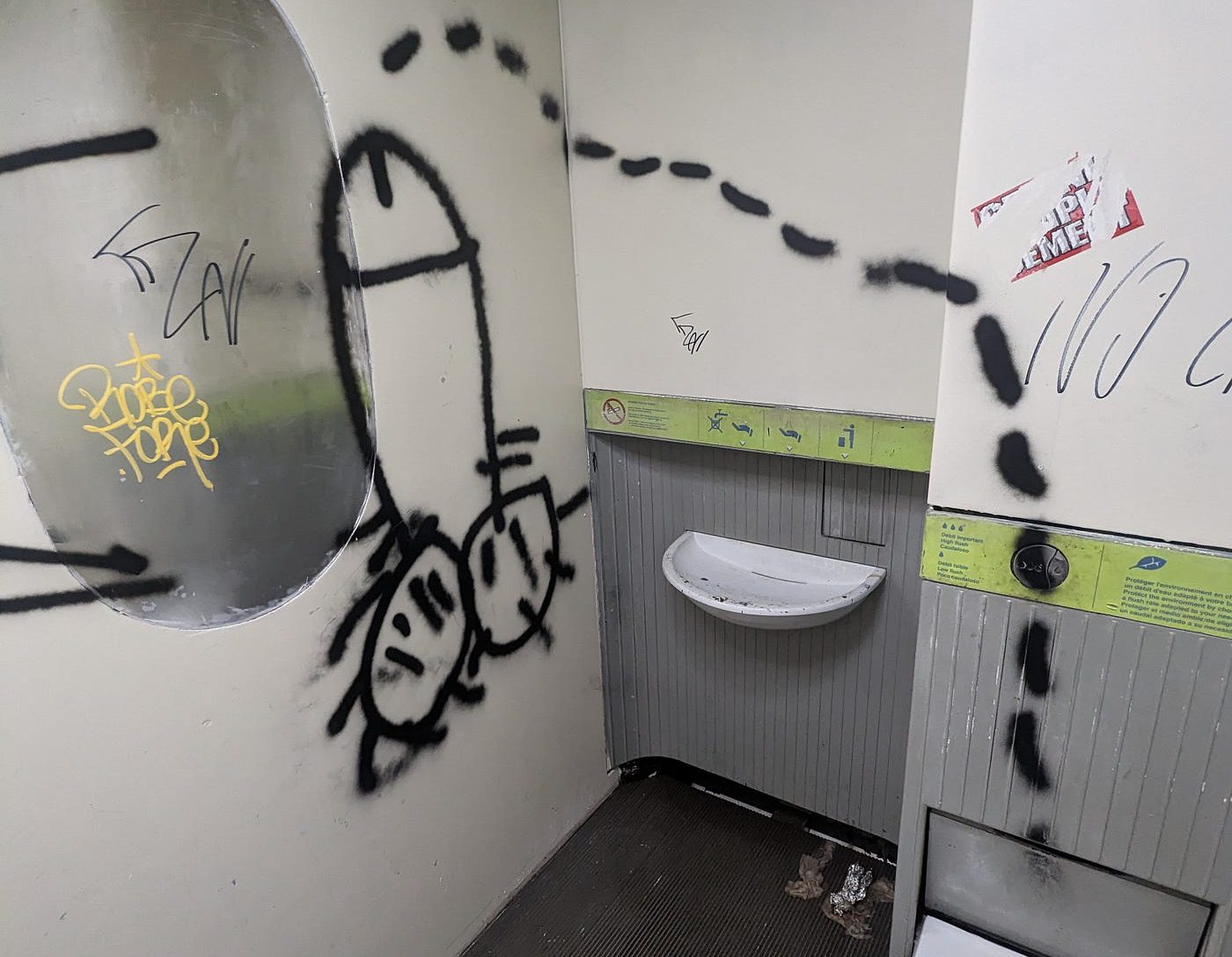

Walk through almost any city, school, construction site, or public restroom, and chances are you’ll eventually find a drawing of a dick. It appears on walls, desks, sidewalks, and even in places where creating graffiti requires effort. While it may seem childish or random, the phenomenon raises an interesting question: why do so many people, across different cultures and age groups, feel compelled to draw the same symbol?
One explanation is simplicity. The shape is easy to recognize and can be sketched in just a few seconds. Unlike complex artwork, it requires no artistic skill, making it an accessible form of expression for almost anyone. Because of this, it often becomes the default doodle when someone is bored, waiting around, or looking to leave a mark behind.
From a social psychology perspective, drawing a penis can also be seen as a form of low-risk rebellion. Public spaces are governed by rules, and leaving a crude drawing behind can create a small sense of breaking those rules without causing serious harm. The act becomes less about the image itself and more about participating in a shared joke that many people instantly understand.
This idea becomes especially interesting when viewed as a social experiment. If one person draws a penis in a public location, others may be more likely to add to it, react to it, or create their own nearby. The symbol acts almost like a cultural meme. simple, recognizable, and easily replicated. People who would never consider creating original graffiti might still contribute because the image already exists within a common social language.
Ultimately, the widespread appearance of these drawings reveals something about human behavior. It highlights our tendency to communicate through humor, test social boundaries, and participate in shared cultural symbols. While the drawings themselves are often dismissed as immature, their persistence across generations suggests they tap into something surprisingly universal about how people interact with public spaces and with each other.

Leave a Reply
You must be logged in to post a comment.