
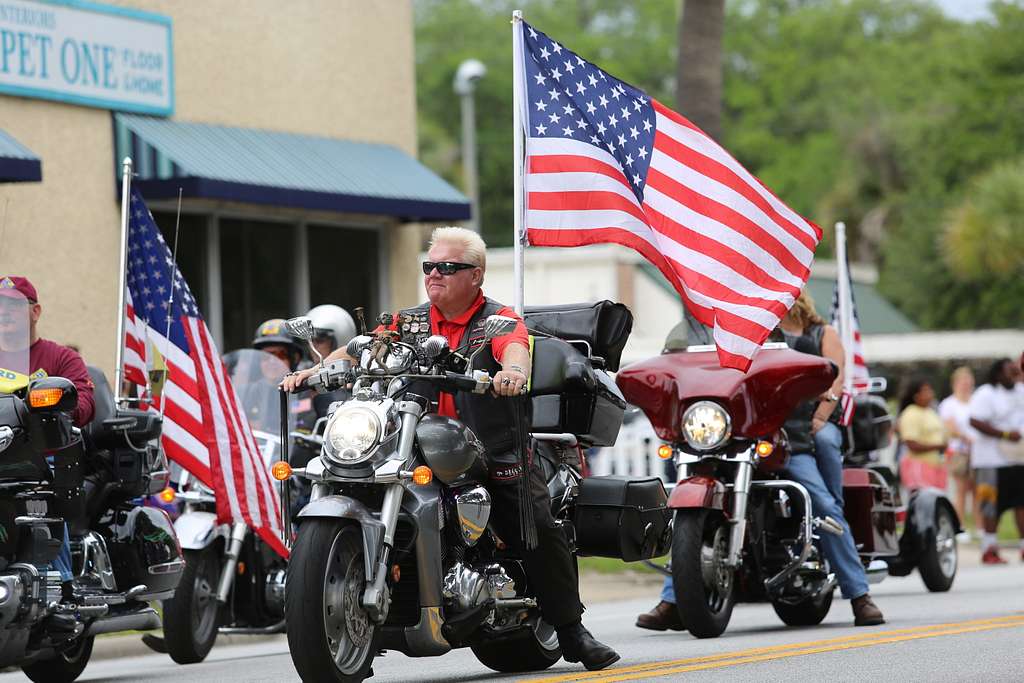

Why Motorcycling Is Statistically More Dangerous in the United States
Motorcycling is often framed as a symbol of freedom in the United States. It is associated with independence, rebellion, and the open road. Yet when we examine the data objectively, a contradiction emerges: despite fewer riders per capita, the United States has a dramatically higher motorcycle fatality rate than many other developed nations.
This raises a necessary question—not an emotional one, but a structural one:
Why is motorcycling in the U.S. so disproportionately deadly compared to countries with similar or even more powerful motorcycles?
Fatality Rates: A Statistical Outlier
When fatalities are measured per 100,000 registered motorcycles, the United States records approximately 67 deaths. By comparison, Italy records around seven, and Japan fewer than five.
These are not developing countries relying on small, underpowered motorcycles in unregulated traffic environments. Italy and Japan are home to some of the most advanced, high-performance motorcycle engineering in the world, operating in dense urban settings and at high usage rates. Despite this, their fatality outcomes are an order of magnitude lower.
This gap cannot be explained by vehicle capability or traffic complexity alone. The data points instead toward differences in culture, infrastructure, and rider development.
Motorcycles as Toys vs Transportation
A core issue lies in how motorcycles are perceived and used.
In much of Europe and Asia, motorcycles function primarily as transportation. They are used for daily commuting, family transport, and routine errands, often accumulating high annual mileage. Their design and usage prioritize utility and efficiency rather than spectacle.
In the United States, motorcycles occupy a different role. They are more commonly treated as recreational vehicles—purchased as luxury goods, status symbols, or weekend-only machines. This difference is reflected in measurable indicators. The average new motorcycle in the U.S. costs roughly $14,000, yet the average annual distance ridden is often below 3,000 miles.
That usage profile aligns far more closely with recreational equipment than with transportation infrastructure. When motorcycles are treated as toys, the surrounding systems—laws, road design, training standards, and public tolerance—adapt accordingly.
Infrastructure and Policy Disincentives
Motorcycling is not meaningfully incentivized in most U.S. cities. Lane filtering remains illegal in roughly 90% of states. There are no national tax incentives, little dedicated parking infrastructure, and virtually no congestion-relief benefits for riders. Urban planning rarely accounts for two-wheel transport as a primary mode of mobility.
In contrast, cities such as London, Barcelona, and Milan allow legal lane filtering, provide free or low-cost motorcycle parking, and integrate motorcycles into traffic flow by design rather than exception.
The result is a self-reinforcing feedback loop: motorcycles remain uncommon, infrastructure remains poor, riding becomes riskier, and adoption stays low.
Training and Licensing: Minimal Barriers, Maximum Risk
The U.S. licensing system allows riders to complete a short safety course, obtain a motorcycle endorsement, and immediately access high-displacement motorcycles. There are no power-to-experience restrictions and no mandatory progression system.
Many European systems operate differently. Riders are required to progress through tiered licenses, engine size or power limits, and mandatory experience accumulation, often combined with repeated testing and formal education.
The outcome is predictable. High-power machines combined with low accumulated skill lead to higher crash severity and fatality rates. This is not a question of courage or intent, but of capability that has not yet been earned.
Cultural Extremes and Skill Polarization
American motorcycle culture tends to polarize. On one end are large, heavy cruisers ridden conservatively but often with limited technical proficiency. On the other are high-performance sport bikes ridden aggressively by relatively inexperienced riders.
What is largely missing is a broad middle ground: riders with moderate engine sizes, high annual mileage, strong technical competence, and a skill-based riding identity. In countries with safer outcomes, motorcycles are normalized as everyday tools rather than fetishized as lifestyle symbols.
Public Perception and Its Consequences
Public image matters because perception directly influences policy. In the United States, motorcyclists are frequently perceived as reckless, antisocial, loud, or inherently risk-seeking.
This perception discourages lawmakers from prioritizing rider-friendly legislation. When motorcycles are viewed as dangerous toys rather than legitimate transportation, safety-oriented reforms become politically unattractive or easy to dismiss.
Industry Direction and Long-Term Decline
The U.S. motorcycle industry has increasingly leaned on nostalgia, lifestyle branding, and high-margin, low-volume products. At the same time, entry-level development has been neglected, technological innovation has lagged behind Europe and Japan, and the average rider age continues to rise.
New rider pipelines remain weak, and an aging customer base without structural renewal does not constitute a sustainable ecosystem.
What Actually Improves Safety (According to Data)
Countries with lower motorcycle fatality rates consistently share several traits. Average engine sizes are smaller, riders accumulate significantly more annual mileage, licensing systems enforce progression, motorcycles are integrated into urban transport, and riding culture emphasizes skill over image.
Safety improves not by discouraging riding, but by embedding competence into the system.
Final Assessment
Motorcycling in the United States is not inherently more dangerous because of roads, machines, or the concept of freedom itself. It is more dangerous because motorcycles are treated as recreational exceptions, skill progression is optional, infrastructure does not support daily riding, and cultural incentives reward image over competence.
Freedom without structure does not produce safety.
It produces variability—and variability kills.

Leave a Reply
You must be logged in to post a comment.